The world of marketing is always evolving to adapt to shifting consumer behavior. Promotional products are a special kind of product that has been around for a long time. This staple marketing strategy of handing out high-quality promotional products can provide your business with plenty of benefits.

Let us dive into how your business can use promotional products to increase sales, brand awareness, and return on investment (ROI).
What is a promotional product?
A promotional product is essentially a free or low-cost product that companies give out in order to garner the interest of their target market. These products are typically branded with an identification (e.g., brand name, logo, slogan, or tagline) of your company. They are then distributed with the ideal of brand promotion in mind. Marketing and sales teams often give out promotional products at events so that the company gains additional exposure over time.
Now, you may be wondering how promotional products help your business when they are distributed for free. Surely that is a budget sink? The answer is that as long as the marketing efforts are carefully carried out, giving out promotional products will not be in vain. How companies promote their products goes a long way in terms of consumer interest and demand.
What are examples of promotional products?
Promotional products are also called freebies, free swag, promo products, merch, and tchotchkes. You may have noticed the trend: these items are free for the recipients. Since businesses want to make a reasonable return on their investment in creating and distributing promotional products, these products are often small and easy to make.
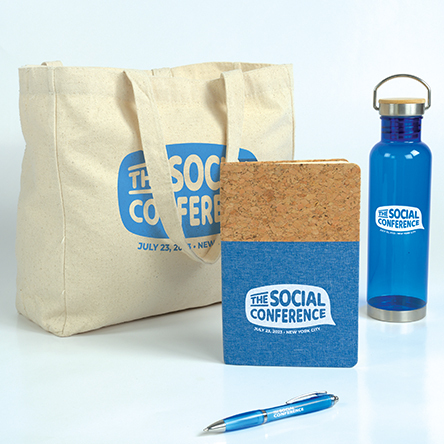
Common promotional products include plastic pens, tumblers, and other small items. The key to making a successful promotional product is to distribute items that have high usability and visibility so that they are not tossed immediately into the trash or hidden away to collect dust. If you can take advantage of trends, such as what people want to be gifted or regifted during the holiday season, that can make your promotional products even more effective.
Why do companies use promotional products?
Generate buzz
Why use promotional products to promote your business? Well, the main purpose of promotional products is to generate hype or awareness around a product. People love to get free items, especially free merch that appears to be useful or appealing. The fact that you are willing to give things out for free will make your target market interested in your brand. At the very least, they will become aware of your brand, and brand awareness always goes a long way!
Impress consumers with the tangibles
There is a value to tangible branded products that digital and display ads simply cannot achieve. People will be going around and physically holding the promotional pens and mugs and shirts that you give out as free merch. It is easier for your brand to remain acknowledged in the back of people’s minds, which means you gain a prolonged generation of impressions for months, if not years.
They complement other marketing efforts
Promotional products are often given away at business events, whether that is to other businesses or consumers who attend the events. If you give someone a tangible object that they end up keeping, they are more likely to remember who you are. Being remembered by your potential customers can be an invaluable thing, especially for smaller businesses that are just getting their brand name out there.
Gifting leads to reciprocation
Much like free gift campaigns, giving out free promotional products is a proven effective sales strategy. Studies have shown that if people receive something for free, they are more likely to be invested and want to reciprocate. That reciprocity may involve either sharing the awareness of the product with other people or making a deal with your business somewhere down the line.
Boost customer loyalty
Giving away free promotional products is a fantastic way to connect better with your customers or at least start a sense of connection. Customers who feel that they are worth spending money and resources on are more likely to give you their attention and interest. Since customer loyalty can lead to increased word-of-mouth marketing and brand success, boosting it is just another potential benefit that promotional product marketing can bring you.
What to consider when creating promotional products?
There are many things to consider when choosing a promotional product for your business. Since you will be gaining plenty of long-term impressions, these are essential questions to pose when devising a promotional product campaign.
Quality
Because these little promo items will be representing your brand, it also means that there should be a certain standard of quality when your company chooses to give out free merchandise. If a pen you give out looks unappealing and runs out of ink very quickly, the user is unlikely to be impressed. Meanwhile, if the pen is fairly sturdy and useful across its reasonable lifetime, the consumer will at least be subconsciously impressed.
Budget
Business-to-consumer (B2C) companies typically allocate up to 10% of their revenue to marketing efforts. Promotional products are usually slotted into this marketing budget. However, your marketing team also has to consider other marketing strategies that they budget for, such as limited-time sales, other giveaways and raffles, search engine optimization, Google Ads, pay-per-click (PPC), and more. Pick a budget maximum to spend on promotional products so that your team is comfortable with the amount.
Define your target audience
Market research is your best friend since it lets you know what kind of consumer will be your business’s best friend. Know the age and interests of your target market so that you can give them appropriate, useful items. If your target market is unlikely to benefit from writing utensils, it would probably be best to avoid giving out pens.
Figure out distribution channels
There are many ways to get your promotional products out there. One great way to pique your audience’s interest is to give out free promo products during events, such as trade shows and even holiday parties. Free promotional products are a fantastic way to garner attention at these events, which is an added benefit.
Is it worth it to hand out promotional products?
Generally, the brand visibility and awareness that come with handing out free promotional products are worth the potential hassle.
There is a psychological appeal to receiving free promotional gifts that are relatively high quality for their purpose. Customers may experience an improved sense of loyalty and appreciation toward your business. Positive feelings directed towards your business can go a long way, which makes many businesses find promotional product marketing a worthwhile investment.
How to pick the right promotional product
If you have decided to try out a promotional product marketing strategy for your business, you will inevitably reach the question of “what promotional product should I hand out?”
The answer will depend greatly on your brand, your target audience, as well as your distribution options. It can be challenging to decide what type of promotional product is best for your brand.
It may be a good idea to choose a type of promo product that is associated with your brand or what your business wants to achieve. There is generally no perfect product that is one size fits all in terms of what every business should offer. However, plastic pens are definitely one of the most popular types of promotional products since pens are commonly used.
If you offer products and services that are related to lowering stress and increasing success, you may want to consider pens and stress balls. If you are in the entertainment industry, you may want to give out T-shirts or posters. The possibilities for promoting your business are endless.
Research what your competitors are doing
Competitor research can help give you an idea of what other companies are doing in your field in terms of promotion. Are they giving out free swag at business events? If so, what kind? Keeping an eye out for what other businesses are doing in terms of promotional products can help your own business decide whether you should be inspired to make similar products or try to contrast them and choose new types of items.
Take advantage of holiday trends
No matter the holiday, people often appreciate gaining gifts that are branded and designed specifically for that holiday season. For example, personalized chocolate, tumblers, and ornaments are popular during the winter months. Teddy bears and candles with also help bring the cheer of festivities that a simple pen may not be able to do.
Simplify your strategy with Amsterdam Printing
Amsterdam Printing is a trusted leader in promotional products. We carefully craft customizable promotional products that fit your budget so you can reap the benefits of promo products without hassle!
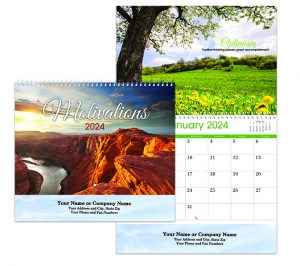
We offer a wide array of corporate gifts and promo items, including pens, drinkware, and calendars. Pick the perfect promo item that fits your budget and brand today!







 The New York State Bag Waste Reduction Law

